Beware the UK “60% Tax Trap” What is it & how to avoid it?
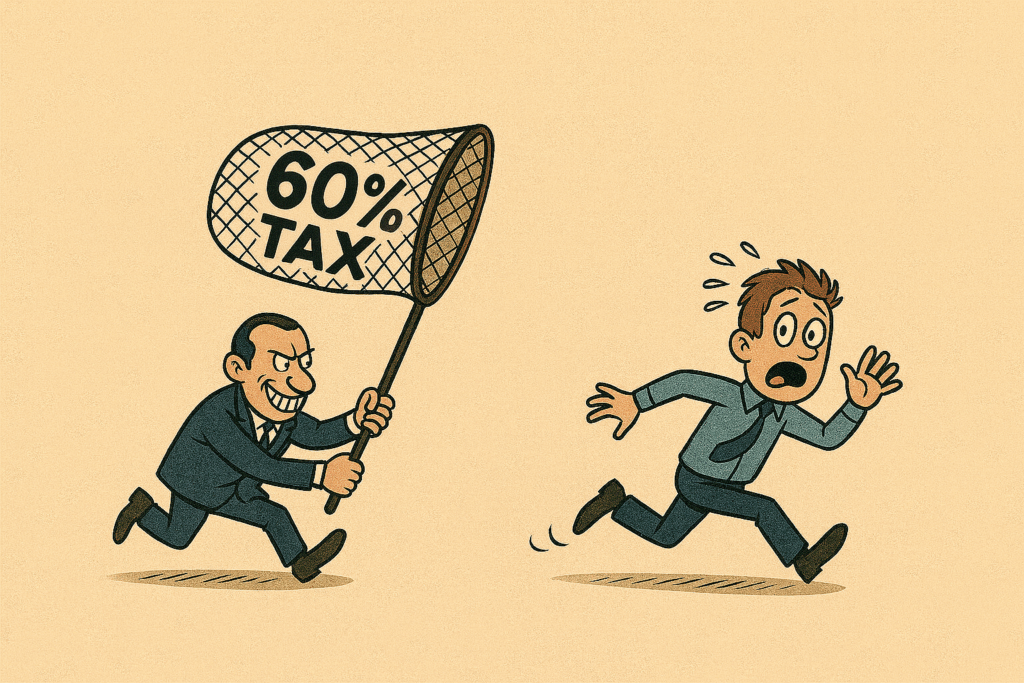
Most people think the highest tax rate in the UK is 45%, paid by those earning over £125,140. But here’s the twist: if you earn between £100,000 and £125,140, you could actually be paying an effective tax rate of 60% on part of your income when you also include national insurance contributions.
This hidden “tax trap” catches thousands of professionals, often without them realising it. Below, we’ll break down why it exists, how it works in practice, and what you can do to reduce the hit.
What is the 60% Tax Trap?
At first glance, UK income tax rates go up to 45% for very high earners. However, between certain income bands, there’s a hidden extra tax in the form of losing your personal allowance.
- Every UK taxpayer gets a personal allowance (£12,570 in 2025/26) — that’s the amount you can earn tax-free.
- Once your adjusted net income goes above £100,000, your personal allowance reduces by £1 for every £2 earned over £100,000.
- That means between £100,000 and £125,140, you’re losing part or all of your allowance — effectively paying tax on income that would otherwise be tax-free.
When you combine that with the normal 40% higher-rate income tax, the effective marginal rate on this slice of income works out at 60%. Once you add National Insurance (NI), the true combined rate can creep even higher to 62%.
60% Tax Trap in Action
You earn £100,000, then receive a £20,000 bonus. Let’s break down what really happens to that £20,000.
| Step | Explanation | Tax cost |
| 1️⃣ Income tax on the bonus itself | £20,000 taxed at 40% (higher rate) | £8,000 |
| 2️⃣ Loss of personal allowance | Earning above £100k reduces your tax-free allowance. The £20,000 bonus removes £10,000 of your allowance. That £10,000 is then taxed at 40%. | £4,000 |
| 3️⃣ National Insurance | You also pay 2% NI on the bonus | £400 |
| Total tax | £8,000 + £4,000 + £400 | £12,400 |
| What you keep | £20,000 – £12,400 | £7,600 |
👉 Effective rate: 60% when you just look at income tax and personal allowance loss. 62% when you include National Insurance.
Who is this likely to affect?
- Employed or self-employed individuals with incomes between £100,000 and £125,140.
- Anyone getting substantial bonuses, commission, or extra earnings pushing them over £100,000.
- People who haven’t optimised their pension contributions or other tax deductions that reduce their adjusted net income.
How to avoid or mitigate the 60% trap
You may not be able to avoid it completely, but there are strategies to reduce how badly it hits you.
💰 Make extra pension contributions (including salary sacrifice)
One of the most effective ways to cut down your taxable income is to put more money into your pension. This can be done either as a one-off lump sum or through salary sacrifice (where part of your pay goes straight into your pension before tax).
By reducing your adjusted net income to below £100,000, you keep your full personal allowance. Even if you can’t get it below £100,000, every pound you reduce still helps because it restores some of the personal allowance you would otherwise lose. As an extra bonus, these strategies can also cut the National Insurance you pay.
🎁 Give to charity
Donations made through Gift Aid or payroll giving reduce your adjusted net income. That means more of your personal allowance is preserved.
The benefit: You’re supporting good causes while also helping yourself pay less tax.
🚗 Take non-cash benefits instead of a cash bonus
Instead of taking your full bonus in cash, you could ask your employer to provide non-cash benefits (like pension top-ups, childcare vouchers, private health cover via salary sacrifice, or even an electric company car).
The benefit: Some of these perks are either tax-free or taxed at a lower rate, helping to keep your adjusted net income under control.
💡Potentially consider tax-advantaged investments (EIS or VCT)
Certain HMRC-approved schemes, such as the Enterprise Investment Scheme (EIS) and Venture Capital Trusts (VCT), can reduce your adjusted net income. For example, up to 30% of the amount invested can be offset against your income tax bill.
⚠️ These are higher-risk investments in small or early-stage companies, so they are not suitable for everyone. They should only be considered with proper regulated financial advice.
Why is it getting worse?
- The personal allowance and income tax thresholds have been frozen or rising more slowly compared to inflation. Over time, that means more people are dragged into this trap, even if their real purchasing power isn’t increasing.
- National Insurance, tax bands, and allowances not keeping pace with wage growth make the effect more painful.
Bottom line
The 60% tax trap is a quirk of the UK tax system: when you earn between £100,000 and £125,140, you could lose much more of your income than it first appears, because of losing personal allowance + paying higher tax.
Once you factor in National Insurance, the effective rate can creep towards 62%.
The good news is that there are ways to soften the blow. Making extra pension contributions, using salary sacrifice, giving to charity, investing in qualifying start up schemes or taking part of your pay through non-cash benefits can all reduce the impact. If you think you might be affected, it’s worth planning ahead to make your income as tax-efficient as possible.