
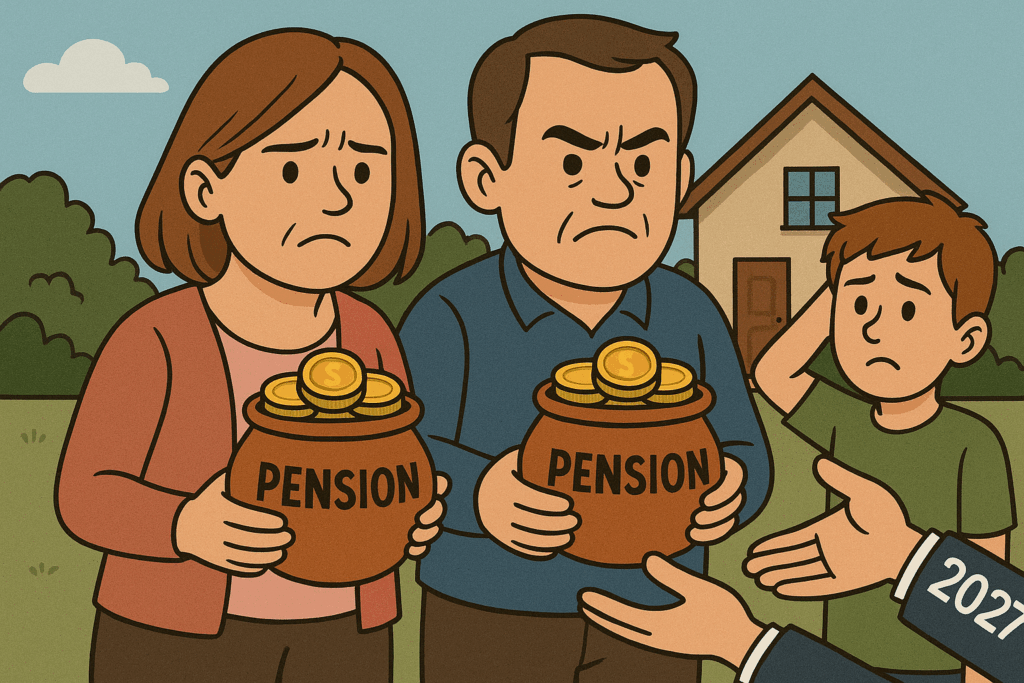
Inheritance Tax (IHT) has always been controversial. Some call it a “death tax”, others see it as a way of balancing wealth across generations.
But one thing is certain: from April 2027, the rules are changing and for many families, that means a bigger tax bill.
The current rules: How IHT works today
Right now, the rules are fairly simple on the surface:
- The standard IHT rate is 40%.
- It applies to the value of your estate above the available allowances.
Two key allowances matter most:
Nil-Rate Band (NRB)
Everyone gets a tax-free allowance of £325,000. Anything above that can be taxed at 40%.
Residence Nil-Rate Band (RNRB)
If you leave your home to children or grandchildren, you get an extra £175,000. For a couple, this means up to £1 million can pass tax-free (£325k + £175k each).
The Loophole (for now): Pensions
Here’s where things get interesting. At the moment, most pensions sit outside your estate for IHT. That means untouched pension pots can be passed on without forming part of the taxable estate. Unsurprisingly, this has made pensions a favourite tool for inheritance planning.
What’s changing in 2027
From 6 April 2027, the pension loophole shuts.
- Unused pension funds and most pension death benefits will now be pulled into the estate.
- This could tip more families over the tax thresholds and land them with a 40% bill they weren’t expecting.
The only exemptions are money left to a spouse, civil partner, or charity. For children, grandchildren, and other beneficiaries, the rules get tougher.
The RNRB taper trap – How pensions can tip you over the edge
For married couples and civil partners, the Residence Nil-Rate Band (RNRB) provides up to £175,000 each (£350,000 combined) when passing on the family home. Once an estate exceeds £2 million, this extra allowance starts to taper away, reducing by £1 for every £2 above the threshold.
Today (before April 2027) – Married couple example
- Estate (excluding pensions): £2.2 million → £200,000 over the £2m limit.
- RNRB reduced from £350,000 (couple) to £250,000 after tapering.
- Combined allowances = £650,000 NRB + £250,000 RNRB = £900,000.
- Taxable estate = £2.2m – £900,000 = £1.3m.
- Inheritance Tax @ 40% = £520,000.
After April 2027 (with pensions included) – Married couple example
- Estate increases with pension pot: £2.7 million.
- Now £700,000 over the £2m limit → RNRB wiped out completely.
- Combined allowances = £650,000 NRB only (no RNRB).
- Taxable estate = £2.7m – £650,000 = £2.05m.
- Inheritance Tax @ 40% = £820,000.
👉 In this couple’s case, the £500,000 pension doesn’t just add £500,000 to the estate — it also wipes out the £350,000 RNRB. That pushes the IHT bill up by £300,000 overall.
This is the hidden danger of the taper: pensions can tip estates over the £2m threshold and trigger far bigger tax bills than families expect.
Double death tax: When two taxes hit the same pot
Another sting in the tail is what’s been dubbed the “double death tax.”
Here’s why:
- Your unused pension could face 40% IHT when pulled into the estate.
- Then, if you die after 75, any withdrawals your beneficiaries (e.g. spouse, children or grandchildren) make are taxed again as income at their marginal rate (20%, 40% or 45%).
For example, a £200,000 pension pot could shrink to just £66,000 if both taxes apply at the top rates. That’s more than 60% gone.
Without planning, families could be hit harder than they realise.
Who is most at risk?
The new rules will bite hardest for:
- Families with large pension pots.
- Couples who thought they were under the £1m allowance.
- Estates hovering around the thresholds where the RNRB tapers away (£2m).
- Unmarried partners, who don’t get the spousal exemption.
Why keeping your Expression of Wishes up to date matters
Most people forget about their Expression of Wishes. It’s the form telling your pension provider who should inherit it. It isn’t legally binding, but trustees usually follow it. From 2027, with pensions pulled into your estate for IHT, an outdated EoW could hit your family with a much bigger tax bill.
Here’s an example:
- You have a pension worth £600,000 and other assets of £800,000.
- Both allowances (NRB & RNRB) have already been used up, the total estate is £1.4m.
Case 1: Updated Expression of Wishes (to spouse)
- The £600,000 goes to your spouse, which is IHT-exempt.
- The remaining estate of £800,000 is left to non-spouse beneficiaries. With allowances already used, the whole £800,000 is chargeable to IHT at 40% = £320,000.
Case 2: Outdated Expression of Wishes (to adult child)
- The £600,000 goes to your child instead.
- That pulls the full amount into the taxable estate.
- IHT due (£1.4m @ 40%) = £560,000.
Just because you didn’t update your Expression of Wishes, your family’s tax bill is £240,000 higher.
That’s why it’s so important to review and update your EoW after major life events such as marriage, divorce, having children or starting a new pension.
Key takeaway
Inheritance Tax has always been about planning ahead. From April 2027, pensions will count towards taxable estates. This will close a long-standing gap and push more families into HMRC’s inheritance tax net.
With risks like double taxation and the loss of the Residence Nil-Rate Band, the impact can be far bigger than many expect, even for so-called “medium estates.”
The earlier you plan, the more choices you’ll have to protect your family’s inheritance.
The points outlined in this blog above are simplified examples of how planning can work in practice. The rules in reality are complex and can carry pitfalls if not handled correctly. That’s why it’s essential to seek expert financial advice tailored to your own personal circumstances before making any decisions.